Most people do not need to sound like a critic. They need to remember whether the wine was tight, generous, tired, good with dinner or worth leaving alone for another year. A useful note makes the next decision easier.
Begin with the condition of the bottle
Before describing flavour, note anything that changes how the tasting should be read: cork damage, oxidation, unusual warmth, sediment or a bottle opened straight from a cold cellar. A flawed bottle is not a fair verdict on the wine.
Add the date automatically or write it down. A note without time loses much of its value when you return to the same vintage years later.
Use words you would say out loud
"Dark fruit, firm and better after an hour" is a complete note. So is "Too sweet for me, but worked with the blue cheese". You do not need to identify five separate berries or borrow a texture you did not notice.
Specific comparisons are useful when they are real. Plain language is easier to recognize later than a performance written for an audience.
Record change, not just the first sip
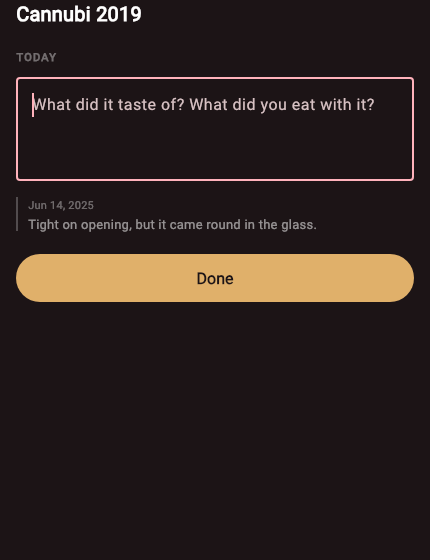
Young wine may open with air. Older wine may fade. Add a sentence after dinner if the bottle changed in a way that affects the remaining bottles. "Tight on opening, came round in the glass" says both what happened and what to try next time.
Food, temperature and decanting belong in the note when they changed the experience. They do not need separate fields.
End with the next decision
If more bottles remain, answer one practical question: open another soon, wait, or serve it differently? This turns the note into a plan. "The other two can wait" may be the most valuable line in the record.
Give a star rating after the words if ratings help you compare. The note explains the number and survives changes in your personal scale.
Keep every opening as its own entry
Do not overwrite the first note when a second bottle is opened. The difference is the point. Cellar keeps notes and ratings as a dated history tied to each opening, while the wine record continues to show how many bottles remain.
Over time, that history becomes more useful than a single score. It shows the wine changing and shows your own taste becoming clearer.