The hard part of a wine inventory is not entering the first fifty bottles. It is knowing where you stopped, avoiding duplicates and ending with a list that still matches the shelves three months later. The safest method follows the physical cellar in one direction and gives every bottle a location as it is counted.
Map the storage before you count the wine
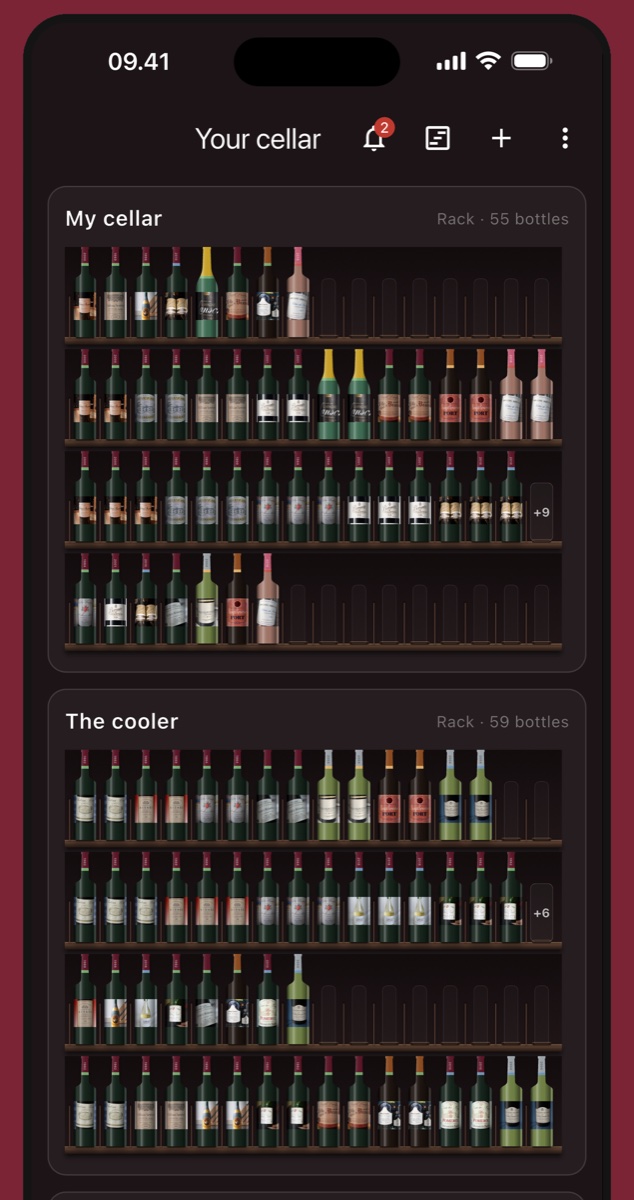
Start with places, not bottles. Write down every rack, cabinet, refrigerator shelf, wooden case and overflow box that currently holds wine. Give each one a short name you would use in conversation, such as "The cooler" or "Dining room cabinet". If a rack has several rows, number them from top to bottom.
This small map prevents the most common inventory mistake: recording the same wine twice because a half case is split between two places. It also makes interruptions harmless. If you stop at The cooler, Row 3, you know exactly where to continue.
Work one shelf in one direction
Begin at the top left of one rack and move across the row. Finish that row before touching the next one. Count identical bottles together when they share a vintage and location. A 2018 and a 2019 of the same wine are separate records because the vintage changes what is in the bottle and when you may want to open it.
Do not pull every bottle out at once. It creates a second job, makes mistakes harder to trace and puts labels at risk. Take out only the bottle you are reading, record it and return it to the same slot.
Record the minimum that will help later
Four facts are enough for the first pass: a label photo, the wine name and vintage, the number of bottles, and the physical location. Producer, region and grape are useful when they are clear on the label. Price, purchase date, drinking window and personal notes can wait until the collection itself is accounted for.
Cellar reads the printed label on the device and offers the name, vintage, producer, region and grape for correction. That saves typing, but the photograph remains important. Wine labels are not forms, and a person can usually settle an uncertain line faster than software can.
Reconcile the count before adding detail
When a rack is finished, compare the inventory count with the number of bottles physically present. If they differ, check that rack immediately while the route is fresh. Look for a bottle behind another, a mixed vintage entered as one wine, or a case that was counted both as a case and as individual bottles.
Only after the count agrees should you add optional detail. That order matters. A beautiful database with three missing bottles is less useful than a plain list that tells the truth.
Keep the inventory current with two habits
Add new wine when it enters the house, not when you eventually find time. When you open a bottle, reduce the count at the same moment. In Cellar, opening a bottle moves that event into its history while leaving the remaining bottles on the shelf.
A short check every few months is still sensible. Pick one rack, compare a handful of positions and correct small differences before they spread. A cellar inventory should behave like the cellar itself: quietly useful most of the time, with very little administration.