The bottle you want is often not the bottle whose full name you remember. You remember Rioja, the bird on the label, the producer's first word or that it was somewhere in the lower rack. A useful cellar search starts with imperfect memory and ends at a physical shelf.
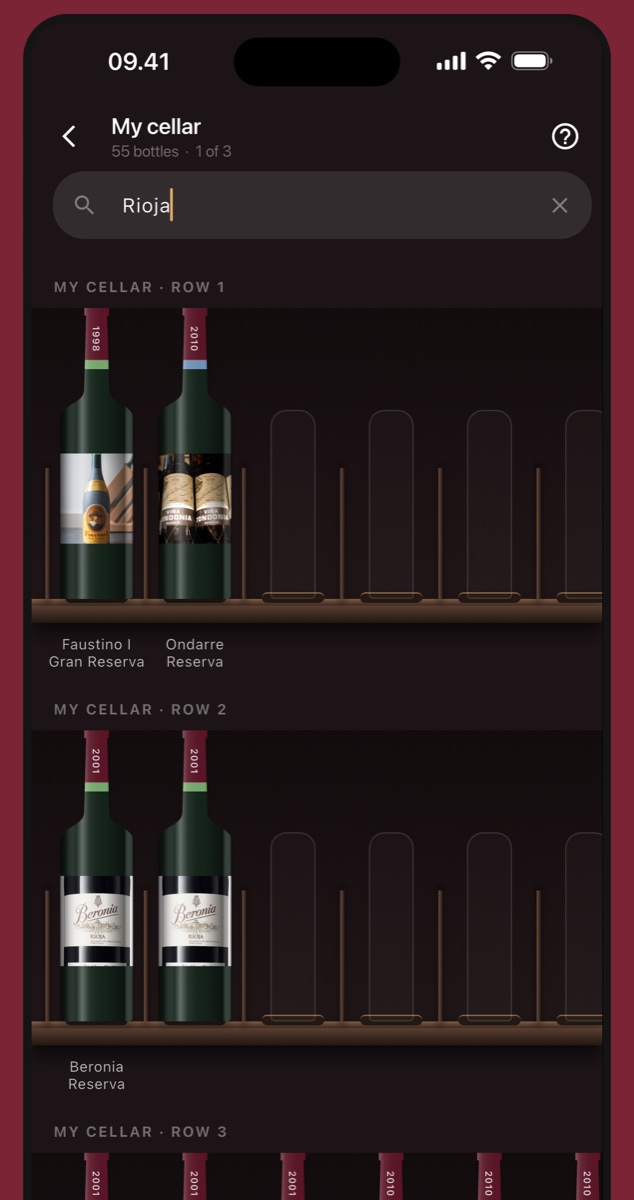
Search every word you have, not one perfect field
Try the region, grape, producer, vintage or any distinctive word from the label. Requiring the exact wine name defeats the way people remember bottles. Cellar searches the fields you checked and the other text that was read from the label.
If a word appears only on the original label, the photograph gives you a second way to confirm the result.
Make the result point to a physical place
A search result that says only "three bottles" still leaves a hunt. Record the rack and row when the wine is added. The result can then show "The cooler, Row 2" and the remaining work is a glance along one shelf.
Use the same direction for every rack. Numbering rows from top to bottom prevents a new interpretation each time someone looks.
Keep location names stable
Renaming "Garage rack" to "Old rack" seems harmless until an older note or printed list points to the former name. Change a name only when the place itself changes, and move the bottles in the inventory when they move in real life.
A wine can occupy more than one location. Record both rather than hiding the split. The search should tell you where all six bottles are, not only where the first three were shelved.
Use the visual shelf as a quick check
People recognize labels and bottle shapes faster than rows of text. A visual rack makes it obvious when the result is near the left edge, beside a gap or grouped with the rest of a case.
It also exposes inventory drift. If the screen shows a full row and the physical rack has two gaps, something was opened, moved or counted incorrectly.
Audit the places that cause trouble
Overflow boxes and mixed cases create more lost bottles than orderly racks. Review those locations when they change. Move a bottle in the inventory at the same time it moves on the floor.
The fastest search system is not the one with the most fields. It is the one whose locations still tell the truth.