A wine collection contains more personal detail than it first appears. It can reveal purchases, prices, travel, taste and the value or location of bottles in a home. An account may be useful, but it should not be the automatic price of keeping an inventory.
No account removes a point of failure
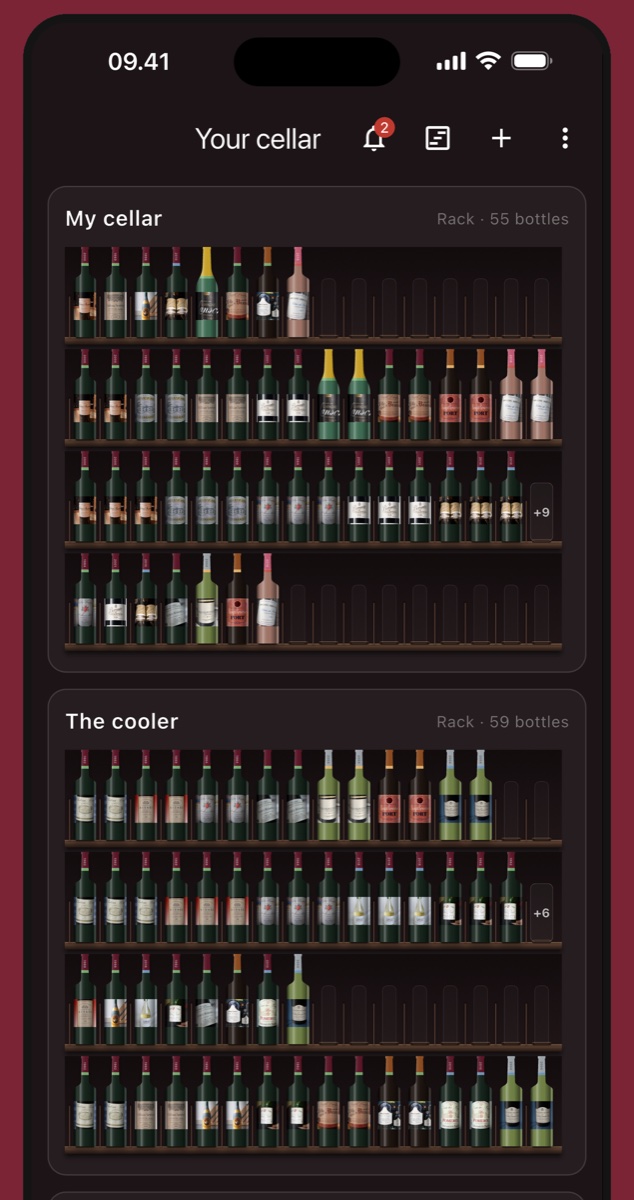
There is no password to forget, no email address to confirm and no service login required before the shelves appear. The app can open in a cellar with no signal because the inventory is already on the device.
It also narrows what the developer can know. If wine names and photos never need to reach a server, they cannot be used to build a profile of the collection there.
Local does not mean impossible to move
A local collection can be exported as a backup file. In Cellar, that one file contains the bottles, racks, notes and photographs. You choose whether it goes to Files, AirDrop, Mail or another destination offered by the iPhone.
The difference is control. Nothing syncs until you decide to move a copy.
The tradeoff is automatic recovery
An online account can restore data after a lost phone without a manual backup. A local app cannot recover a file it never received. If the only copy was on a damaged device, privacy does not reconstruct it.
Export after a large inventory session, after major deliveries and before changing devices. Save the file somewhere other than the phone that created it.
Check what diagnostics actually contain
Local storage and anonymous diagnostics are separate questions. Cellar can share optional app usage and crash information to help find problems. Its analytics code excludes wine names, notes, captions, search text and photo paths, and the setting can be turned off.
Read the privacy policy of any cellar app for the details. "Private" should describe a design you can inspect, not a mood in a headline.
Choose the model that matches your needs
A shared household cellar, automatic multi-device sync or web access may justify an account-based service. A personal collection on one iPhone or iPad may not need that infrastructure at all.
There is no universal answer. The important part is knowing where the only current copy lives and how you will recover it.